
Can You Paint a Vinyl Fence?
A fence that looked right five years ago can start to clash once the rest of the property changes color, and paint feels like the fast fix. On vinyl, that fix comes at a real cost: the surface starts asking for the upkeep the material was bought to avoid, with a factory color swap the cleaner way around it.
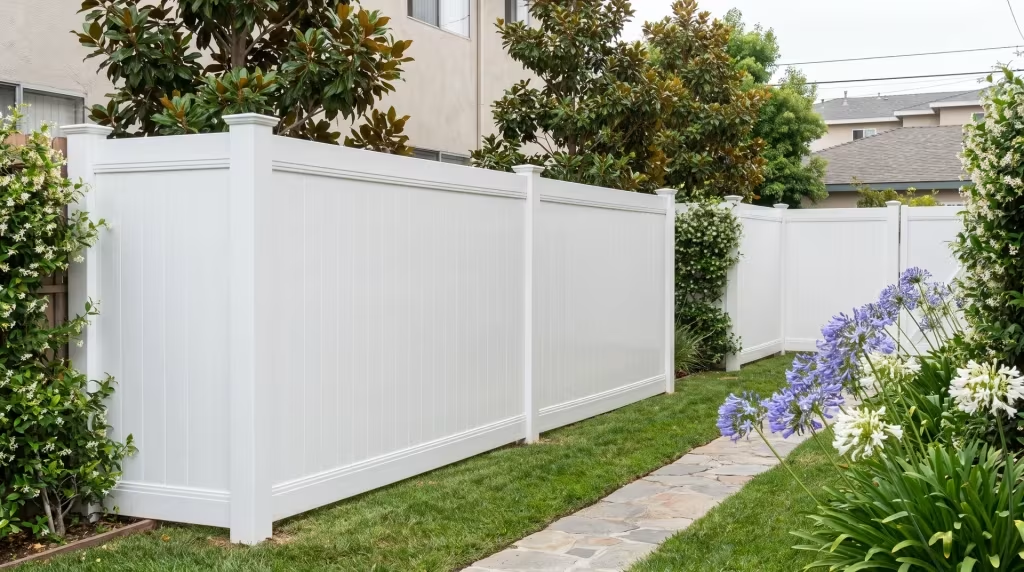
What to expect
- Painting a vinyl fence is technically possible, but the honest answer is usually that you should not do it.
- The pigment in vinyl runs all the way through the material, which is why a scratch never reveals a different color underneath.
- After painting, a vinyl fence goes onto the same repaint cycle that a wood fence is stuck with for good.
- For a real change in look, swapping panels or ordering a factory color is the cleaner path than reaching for a paint can.
You can paint vinyl. The better question is whether you should, and usually the answer is no.
The color in a vinyl fence runs through the material rather than sitting on the surface, which is the whole reason it never needs repainting and why a scratch does not show a different color underneath. Paint gives that up. It sits on top, it can trap heat on darker shades, and from then on the fence is on a repaint cycle like a wood fence.
If you want a different look, changing the panels or picking a factory color is the cleaner route.
Frequently asked questions
Built in. The color is set into the material, not sprayed on the surface, which is why you never repaint it and why it wears evenly.
Cheap coated panels fade in patches and chalk as they wear; quality vinyl keeps its tone even. You should not need to paint a good vinyl fence.
They stay in step. The pigment runs through each board instead of sitting on top like paint, so the frame and accent age at the same rate and never yellow.
One warranty covers both: the transferable limited lifetime term plus our five-year workmanship guarantee, for the life of the fence.
White and light tones fade the slowest and hold their look for many years, helped by UV stabilizers and titanium dioxide.
Darker and wood-grain colors take more sun and can show more change over time. None of it is sudden, and the color is built in, so there is no peeling paint to touch up.
It is built in. The white and the titanium dioxide run the full thickness of the vinyl, so it is solid from the face clear through.
That is why it wears evenly, never wants repainting, and will not yellow. One big-box listing tags white vinyl as painted; a good white fence carries its color inside.