
How to Install a Vinyl Fence
Most of a vinyl fence’s fixed installation order happens before anyone touches a panel: confirming the property line, what the city allows, and where the utilities run. Skip that groundwork on a hard-dig lot, and wrong spacing or an out-of-plumb post become mistakes nothing after the fact can fix.
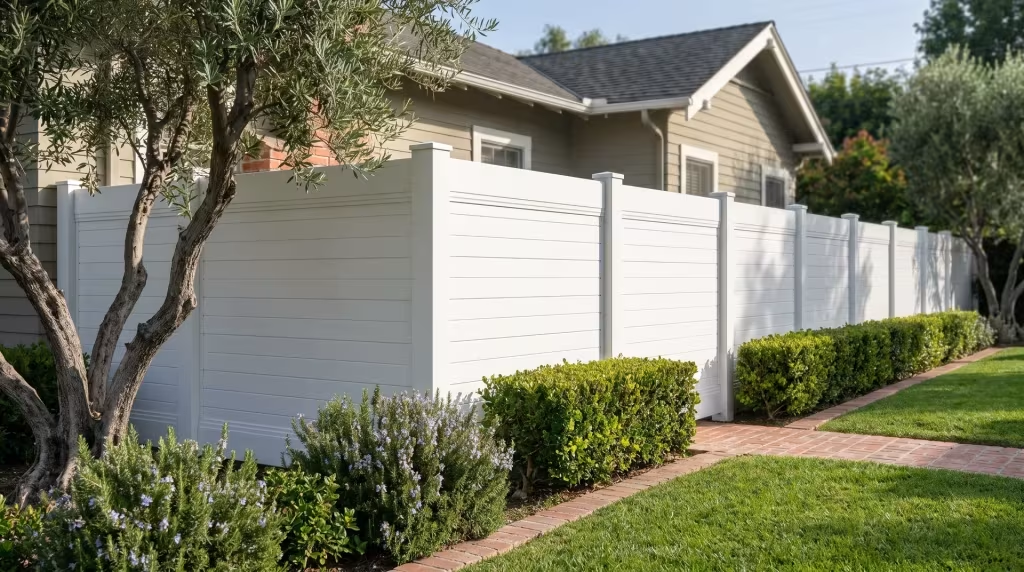
What to expect
- Before any post goes in, the property line and the city's rules on height and setback have to be confirmed first.
- Utility locates must be called in and cleared before any digging starts anywhere on the site.
- Post spacing gets measured off the actual panel width you bought rather than a generic standard.
- Post spacing, plumb, and depth are the mistakes you cannot fix later, and a sloped or hard-dig lot is where that risk shows up most.
A vinyl fence goes up in a fixed order, and most of the work happens before a single panel is handled.
- Confirm your property line and check what your city allows for height and setback.
- Call for utility locates before anything is dug.
- Mark the run, then set the post spacing off the actual panel width you bought.
- Dig and set the posts in concrete, plumb and on a string line.
- Let the posts cure, then slide in the rails and boards and cap everything off.
The parts that go wrong are the parts you cannot redo: post spacing, plumb, and depth. On a slope or a hard-dig lot, that is usually where a homeowner calls us. Estimates are free.
Frequently asked questions
You can, if you’re handy with a level and a saw. What professional install buys you is plumb posts set in concrete, straight lines across the run, and a 5-year workmanship warranty on the setup.
Order the panels alone, or have the same crew that fabricates them put them in.
Most residential fences go in around a day. One crew handles the removal, the footings, and the build in a single visit when the run is straightforward.
Larger yards, slopes, several gates, or custom fabrication can push it to two days, and weather or a permit can shift the start.
A bolt-together kit can be a do-it-yourself job, and for a simple opening some people go that way.
What we build is different: a welded gate matched to your fence, sized to the leaf, self-latching, hung level, and correct for any permit. That’s the part that keeps a gate from sagging a year later.
Yes, and we fabricate rails and panels to your dimensions, then rack or step them so the fence follows your yard’s grade instead of fighting it.
Cutting to size is the whole point of a custom build, whether that means an odd length, a non-standard height, or a run shaped around a corner.