
How to Install an Aluminum Fence
Anyone used to a vinyl run learns fast that aluminum plays by different rules, since the panels don’t flex enough to hide a layout mistake in a gap. Getting the post spacing right the first time is what turns a rigid, pre-built system into an advantage instead of a repeated headache.
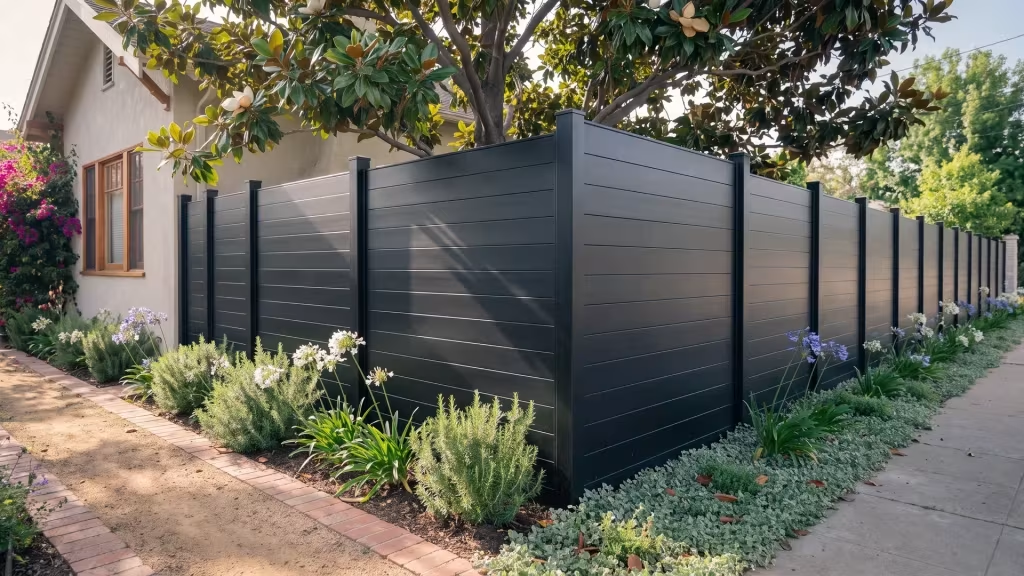
What to expect
- Because the panels arrive rigid and pre-built, post placement has to land far more precisely than it does on a vinyl fence run.
- Before any post hole is dug, the line gets set and a panel is dry-fit between two posts to confirm exact spacing.
- On sloped ground the panels rack to follow the grade instead of stepping down it, which changes where each post must be set.
- Once the run is installed square, powder-coated aluminum needs no repainting and resists rust, leaving little more than rinsing for upkeep.
Aluminum panels are rigid and pre-built, so the tolerance for error in the post layout is much smaller than with vinyl.
Set the line first, then dry-fit a panel between two posts before anything is dug. Set posts in concrete, plumb, and keep the spacing exact along the whole run. On sloped ground, aluminum racks, which means the panel follows the grade instead of stepping down it, and that changes where each post lands.
Powder-coated aluminum needs no paint and does not rust, so once it is in and square, the maintenance is essentially rinsing it.
Frequently asked questions
A bolt-together kit can be a do-it-yourself job, and for a simple opening some people go that way.
What we build is different: a welded gate matched to your fence, sized to the leaf, self-latching, hung level, and correct for any permit. That’s the part that keeps a gate from sagging a year later.
Most residential fences go in within a day or two once the materials are on hand.
The real timeline depends on the length of the run, the number of gates, and the ground we are working with. After a quick site visit we give you a firm schedule, not a guess.
A few worth naming. A solid wall blocks the breeze and traps more heat. Because aluminum weighs less than steel, a hard, square hit can leave a dent.
Coastal salt air sits outside the material warranty, and it is the premium tier, not the cheapest fence around. For most yards, none are dealbreakers.
It softens sound rather than silencing it. A solid panel dampens road and neighbor noise in a way an open or gapped fence cannot, which is a real reason people put one along a busy street.
Treat it as taking the edge off, not a soundproof wall, since the drop depends on the noise and the setting.